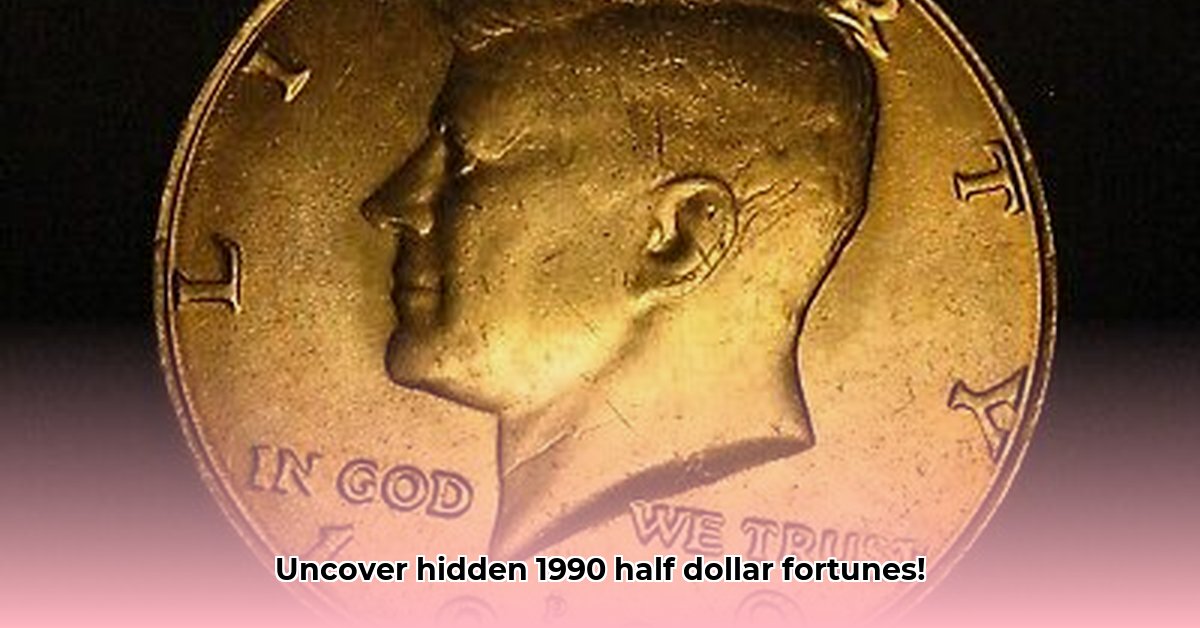
The 1990 Kennedy half-dollar: a seemingly ordinary coin, yet one holding surprising potential value for collectors. For more on valuable coins, see this historical coin guide. This detailed guide explores everything you need to know, from identifying mint marks and assessing condition to understanding current market values and smart buying/selling strategies. Whether you're a seasoned numismatist or a curious beginner, this guide will equip you to navigate the world of 1990 Kennedy half-dollars.
Mint Marks and Variations: "P" vs. "D"
Every 1990 Kennedy half-dollar bears a mint mark – a small letter indicating its place of origin: "P" for Philadelphia and "D" for Denver. This seemingly minor detail significantly impacts a coin's value. The Denver Mint produced fewer 1990 half-dollars than Philadelphia, making the 1990-D inherently rarer and, consequently, more valuable. This mirrors the principle of supply and demand seen in other collectibles, such as limited-edition trading cards or stamps.
(Insert high-quality images of both 1990-P and 1990-D half-dollars here)
Condition and Grading: The Sheldon Scale
The condition of a coin drastically affects its value. Numismatists use the Sheldon Scale, a 70-point system, to grade coins based on their wear and tear. A coin graded MS+ (Mint State Plus) is practically perfect, showing no signs of circulation. Grades like AU (About Uncirculated) indicate minor wear, while circulated coins (lower grades) show significant signs of use. The difference in value between an MS+ and a heavily circulated coin can be substantial, highlighting the importance of conservation and careful handling.
(Insert several high-quality images illustrating different grades – MS+, AU, circulated – of 1990 Kennedy half-dollars.)
| Grade | Description | Approximate Value Range (USD) |
|---|---|---|
| MS+ (Mint State Plus) | Near-perfect, almost no wear | $3.50 - $4.00 |
| AU (About Uncirculated) | Minor wear, still very good | $1.00 - $2.00 |
| Circulated | Shows noticeable wear and tear | $0.50 - $1.00 |
Important Note: These values are estimates and can vary based on market conditions and other factors. Professional grading by PCGS or NGC is crucial for obtaining an accurate assessment of a coin's condition and value. Have you ever wondered how much variation exists across grading services? This highlights the importance of using credible sources for valuation.
Market Value Analysis: Factors Beyond Face Value
The melt value of a 1990 half-dollar—the value of its copper and nickel content—is significantly lower than its collector value. This disparity emphasizes that numismatic value rests not merely on material worth, but on rarity, condition, and historical significance. While a 1990 half-dollar's metal content might be worth only a few cents, a well-preserved 1990-D in high grade can fetch several dollars, even exceeding ten dollars in exceptional condition.
Isn't it fascinating how a coin's inherent worth can be so different from its collector's value?
Factors Affecting Value: A Deeper Dive
Several factors influence a 1990 half-dollar's value:
- Condition: Pristine, uncirculated coins are highly sought after, commanding significantly higher prices than heavily circulated ones. Even minor imperfections can significantly reduce a coin's value.
- Mint Mark: The "D" mint mark generally adds value due to the lower mintage from the Denver Mint.
- Metal Composition: While the metal composition (75% copper, 25% nickel) doesn't dramatically impact value, it's important to note the difference from pre-1965 silver half-dollars.
- Rarity and Errors: Extremely rare variations, such as mint errors or unique characteristics, can greatly increase a coin's value.
Buying and Selling: Tips for Success
To avoid overpaying or getting counterfeit coins, practice these strategies when buying or selling 1990 Kennedy half-dollars:
- Buy from reputable dealers: Choose dealers with a proven track record and positive customer reviews.
- Verify authenticity: Before purchasing, examine the coin carefully for signs of tampering or counterfeiting.
- Professional grading: For higher-value coins, professional grading from PCGS or NGC provides an objective assessment of condition and authenticity, influencing sale price.
- Research market value: Consult up-to-date auction data and price guides to establish a fair market value before selling.
Conclusion: A Coin's Story
The value of a 1990 Kennedy half-dollar is ultimately determined by its condition and mint mark. While not exceptionally rare, a well-preserved 1990-D in high grade can be a valuable addition to a collection. Remember that market values fluctuate. Continuous research and consultation with reputable resources will keep you informed about current trends and prices.
Resources
- PCGS
- NGC
- USA Coin Book